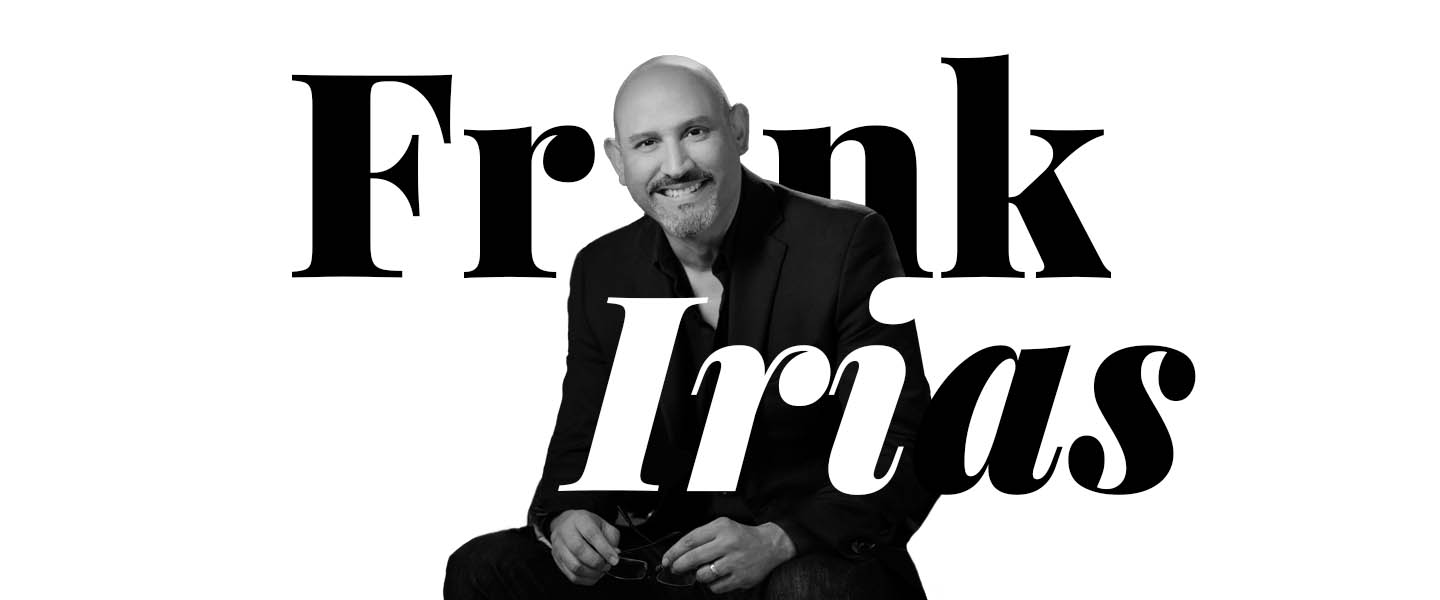
Founder & Creative Director, Daisho Creative Strategies
For more than 30 years, I’ve worked with businesses and organizations on brand strategy, branding, graphic design, website strategy and marketing, helping them clarify what they need to communicate before deciding how to communicate it. As founder and creative director of DAISHO Creative Strategies, much of my work sits at the intersection of business strategy and creative execution.
Very early in my career, I realized that design was only one piece of the puzzle. I saw unattractive brands outperform beautiful ones. I saw businesses that didn’t seem to market much outperform companies that seemed to be everywhere. Clearly, looking good and being visible weren’t enough.
That realization changed the way I approached the work. I became less interested in starting with What should we make? and more interested in What are we trying to accomplish?
That question still drives much of what I do today.
What More Than 30 Years of Doing the Work Has Taught Me.
C lients often come to us with a solution already in mind. They need a new website. They want to rebrand. They need a brochure, campaign or some other marketing piece. Sometimes they’re absolutely right, but I’ve learned not to assume the assignment is the problem.
I want to know who we’re trying to reach, what that person needs to understand, what isn’t working today and what needs to change. Why should someone choose this business? What does it genuinely do differently? How does the website fit into the sales process? Is the brand really the problem, or is the problem how the company is communicating it?
Those conversations can be harder than the design itself. They’re also some of the most rewarding work I do.
There is a moment I particularly look for during a deep discovery. It’s the moment when a client sees something about their own business differently. Maybe we’ve uncovered an advantage they’ve been taking for granted. Maybe we’ve recognized that the audience isn’t who they assumed it was. Maybe we’ve finally found a simpler way to articulate something they’ve struggled to explain for years.
When that happens, I know we’ve delivered value that goes much deeper than design.
It’s also why Challenge for Clarity™ became such an important part of how we work at DAISHO. Sometimes clarity comes from asking a few better questions. Other times it requires a much deeper brand discovery. Either way, I’d rather challenge the assignment at the beginning than beautifully execute the wrong solution.
Strategy Changed the Way I Think About Design.
Started my design career in 1993.
I care deeply about typography, composition, imagery, and detail. But experience has made me much less willing to let aesthetics lead the conversation. If the message is unclear, great design can simply make an unclear message look better.
I began my career in marketing and design in 1993. A few years later, I made a deliberate move into the production side of the business, joining one of Miami’s larger commercial printers. The company had differentiated itself by offering design services—still uncommon for a print shop at the time—and the experience gave me a much deeper understanding of how creative ideas actually get produced and put to work.
In 1998, I moved to Nicaragua, where I was born, and opened an advertising agency. There, I worked with organizations including INTUR, Nicaragua’s tourism authority; INISER, the state-owned insurance company; and the Princess Hotel, later acquired by Hilton. One of the most memorable assignments was helping relaunch Harley-Davidson in Nicaragua.
When I returned to Miami in 2001, I came back with a broader perspective on the work. I had experienced design from multiple sides—as a designer, through production, and as a business owner working directly with organizations on real business challenges. That instinct—to look beyond the creative assignment and understand the larger problem behind it—has stayed with me throughout my career.
I’m still a designer. I care deeply about typography, composition, imagery and detail. But experience has made me much less willing to let aesthetics lead the conversation. If the message is unclear, great design can simply make an unclear message look better.
The word rebrand gets overused. Sometimes a company genuinely needs to rethink its brand positioning, value proposition, messaging and visual identity. Other times it needs fresh design, clearer communication or a better way of applying the brand it already has. A rebrand is a big deal, and part of our responsibility is being willing to tell a client when the answer isn’t the larger project they originally thought they needed.
Big Brands and Small Businesses Aren’t as Different as They Look.
Over the years, I’ve had the opportunity to work with large organizations and significant marketing budgets, as well as small businesses where every dollar has to work extremely hard. What surprised me was how much those experiences had in common.
A marketing department inside a large organization still has a budget it needs to stretch, limitations it has to work around, people it needs to convince and goals it is expected to achieve. The scale may be different, but many of the decisions aren’t.
When John Keepax and I founded DAISHO in 2007, Royal Caribbean became one of our first major relationships. The account gave us the opportunity to work across multiple departments inside a global organization, each with its own objectives and challenges. That experience reinforced something I had already begun to understand: there is rarely one universal marketing problem inside a company. You have to understand what the people in front of you are actually trying to accomplish.
Other relationships followed, including The Setai and the University of Miami and UHealth, alongside privately owned businesses, schools, nonprofits and organizations of very different sizes. In 2012, I purchased John’s half of DAISHO and continued building the firm around that mix of clients and challenges.
Working across that range taught me not to equate a larger budget with a better answer. Constraints are always part of the job. The objective is to understand what we’re trying to accomplish and make the resources available work intelligently toward it.
Sometimes the Best Work Changes the Question.
One of my favorite examples of brand discovery changing the direction of the work came through our relationship with GBS Group.
When we first worked together around 2009, they came into the process with assumptions about where their growth opportunities were. Through discovery, we began looking at the business differently and uncovered another direction worth pursuing. The resulting work wasn’t simply about changing how the company looked. It helped clarify where the business should focus, who it should pursue and how it should communicate its value.
More than a decade later, GBS came back to us as a new generation was taking leadership of the company. We went through discovery again.
I love that.
That’s the kind of brand strategy work I find most rewarding: not walking into the room with the answer, but helping uncover an answer that changes how the client sees the business.
The Relationships Matter More Than the Projects.
Familiarity isn’t permission to become complacent. If anything, a long-standing client deserves more from us because they’ve trusted us with years of their business, their changes and their challenges.
Of everything we’ve created over the years, I’m probably proudest of how long many clients have chosen to keep working with us.
My relationship with Westminster Christian School began in 1997, a decade before DAISHO existed. Over nearly three decades, I’ve worked on an extraordinary range of communications for the school and watched the institution, its people and its brand evolve.
In many ways, I’ve lived the Westminster brand through design.
I’ve had a similar experience with entrepreneur David Schwedel, whom I’ve worked with since 2001 across different businesses and ventures. The assignment changes. Sometimes even the industry changes. But the relationship continues.
Those experiences have shaped the way I think about client service. I don’t believe a relationship is something you earn once. Whether we’re working with someone for the first time or we’ve known them for 20 years, every interaction is another opportunity to remind them why they chose to work with us.
Familiarity isn’t permission to become complacent. If anything, a long-standing client deserves more from us because they’ve trusted us with years of their business, their changes and their challenges.
Design Should Help Tell the Story.
Strategy doesn’t always lead to a positioning statement or a new brand identity. Sometimes it changes the way a physical space communicates.
Our recent work with Murgado Automotive Group is a good example. When thinking about graphics for their automotive environments, I became interested in something beyond decorating the space. I listened to the way leadership talks about the organization, the brands and the story they want customers and visitors to understand.
That became part of the design problem.
The question wasn’t simply What would look good on this wall? It was How can the environment help tell the story they’re already telling?
That distinction may seem small, but to me it’s the difference between decorating something and communicating through design.
Why I Don’t Believe in Random Acts of Marketing.
O ne of the patterns I’ve seen repeatedly is how easily marketing becomes reactive. A sales piece is suddenly needed. Someone realizes the website hasn’t been updated. Sales are slow, so a campaign gets launched. A new service is introduced and everyone scrambles to promote it.
Each individual request may make sense. The problem is that without a larger direction, the business keeps starting over.
Random acts of marketing are not a strategy.
Over time, my thinking has moved increasingly toward building systems. Decide what the business actually needs to communicate.
Create something valuable around it. Build that knowledge into the website. Then find intelligent ways to extend it into sales, search, social media, email and the other places where customers encounter the business.
Don’t create something valuable once and abandon it. Build once. Keep building from it.
That thinking eventually led to DAISHO ONE™ and Create Once. Market Everywhere.™ They aren’t simply marketing lines to me. They’re the result of watching businesses struggle with disconnected marketing and asking how we could create a better way to work.

A Perspective Built Through Practice.
I don’t consider myself a traditional thought leader, and I don’t have much interest in publishing opinions simply for the sake of having something new to say. But after doing this for more than 30 years, I do have a point of view.
I believe businesses should understand their audience before they start talking to them. Brand strategy should inform design rather than be invented afterward to explain it. A website should keep evolving after launch. Good marketing should make it easier for someone to understand why they should choose you. And when you create something valuable, you should find ways to keep building from it rather than continually starting over.
Throughout DAISHO’s articles, I occasionally add my perspective to conversations about brand strategy, branding, websites, design, marketing, search and AI, drawing from the things I’ve learned through the work rather than simply commenting on what’s changing in the industry.
TESTIMONIALS
What Clients Are Saying.
uncovered what makes my business unique.
“Frank’s thoughtful, thorough approach uncovered what makes my business unique and brought clarity and cohesion to my brand story.”
Nana Campana
CEO, The Paper Tree House
understand the brand and were able to deliver extremely well.
“They took time to understand the brand and were able to deliver extremely well on a very wide variety of marketing projects.”
Michelle Yanda
Director of Brand Innovations, Royal Caribbean International
valuable member of our marketing and communications team.
“Frank is a great idea guy, helping me with projects from concept to completion. He is a valuable member of our marketing and communications team.”
Ana Poveda
Director of Communications & Marketing, Westminster Christian School
The Work Keeps Changing. The Objective Doesn’t.
The tools I’ve used throughout my career have changed dramatically. The way people search has changed. Websites have changed. Marketing channels have changed. Today, AI is changing how people discover and evaluate businesses again.
I’m interested in all of it. But I don’t think the fundamentals have changed nearly as much.
Who are you trying to reach? What do they need? What do you need them to understand? Why should they choose you? And how do we communicate those answers in a way that moves them?
Figure out the heart of that first.
Then We Can Decide What To Create.
Have something you’d like to think through?